

Introduction
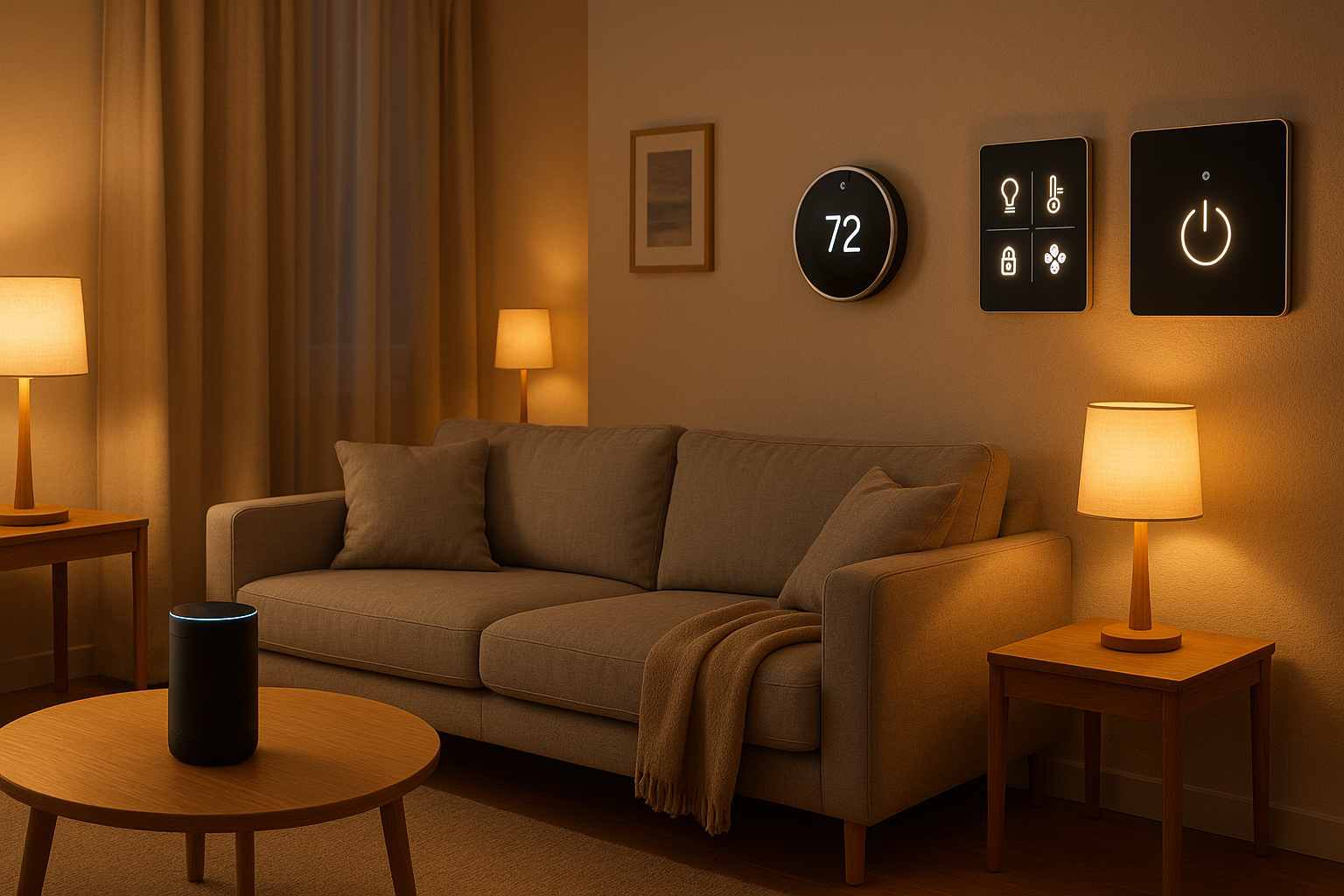
Imagine waking up to your favorite music, your room temperature automatically adjusted to your liking, and your coffee brewing on its own—all before you step out of bed. Welcome to the world of smart homes, where technology understands and responds to your daily habits.
The concept of smart living has grown rapidly over the past decade. With advances in IoT (Internet of Things), artificial intelligence (AI), and home automation, smart homes are no longer a luxury—they’re becoming a part of everyday life.
This article explores how smart home technology is transforming our routines, improving energy efficiency, and redefining comfort and security.
1. What Is a Smart Home?
A smart home uses internet-connected devices to automate and control household systems like lighting, heating, appliances, and security. These devices communicate with each other, often through voice assistants like Alexa, Google Assistant, or Siri.
Examples of Smart Home Devices:
- Smart lighting systems (Philips Hue, Wipro, Syska)
- Voice-controlled assistants (Amazon Echo, Google Nest)
- Smart thermostats (Nest, Ecobee)
- Security cameras and video doorbells (Ring, Arlo, Mi)
- Smart plugs and switches
- Robot vacuum cleaners (Roomba, Mi Robot)
Each device can be controlled through a smartphone app or voice command, creating an interconnected home ecosystem.
2. The Role of IoT in Smart Homes
The Internet of Things (IoT) is the foundation of smart homes. It connects everyday devices to the internet so they can share data and function intelligently.
For instance, your smart fridge can track food inventory and suggest recipes, while your washing machine might start automatically when electricity rates are lowest.
Key Benefits of IoT in Homes:
- Seamless device communication
- Remote control through mobile apps
- Predictive maintenance (devices alerting before issues occur)
- Improved energy efficiency
IoT has made homes smarter, more efficient, and more sustainable.
3. Artificial Intelligence: The Brain Behind Smart Homes
While IoT connects devices, AI gives them intelligence. AI enables devices to learn from your habits and adapt automatically.
For example:
- Your thermostat learns when you’re home and adjusts temperature automatically.
- AI cameras distinguish between family members, pets, and strangers.
- Smart lighting changes brightness and color based on time of day.
AI makes homes not only automated but also context-aware—understanding and anticipating your needs.
4. Smart Security: Safety Redefined
Home security has evolved dramatically with smart technology. Gone are the days of traditional locks and alarms.
Modern Smart Security Features:
- Smart door locks with fingerprint or mobile app access.
- Video doorbells with real-time visitor monitoring.
- Motion sensors that detect unusual activity.
- AI-based surveillance cameras with face recognition.
These systems send instant alerts to your phone, ensuring you can monitor your home from anywhere in the world.
5. Energy Efficiency and Sustainability
Smart homes are not just about convenience—they’re also about sustainability.
Smart meters, thermostats, and lighting systems help reduce energy waste. For example, lights turn off automatically when no one’s in the room, and washing machines operate during low-tariff hours.
Energy-Saving Examples:
- Smart lights: Adjust brightness and turn off automatically.
- Smart thermostats: Learn your schedule to optimize heating/cooling.
- Solar-powered automation: Integrate renewable energy for self-sufficiency.
By 2030, smart homes could reduce household energy consumption by up to 30%, contributing to a greener planet.
6. Smart Kitchens: The Heart of the Modern Home
Smart kitchen appliances make cooking faster, safer, and more enjoyable.
Examples of Smart Kitchen Tech:
- Smart refrigerators: Track groceries and suggest recipes.
- AI ovens: Automatically adjust cooking times and temperatures.
- Voice-controlled coffee makers: Brew your drink on command.
- Connected dishwashers: Operate during low-energy hours.
These innovations save time, reduce waste, and bring restaurant-level precision into your kitchen.
7. Entertainment: The Smart Way to Relax
From smart TVs to AI-powered sound systems, home entertainment has become more immersive and personalized.
- Smart TVs recommend content based on your viewing habits.
- Voice assistants control music, lighting, and ambiance.
- Home theaters integrate with apps for cinema-like experiences.
- Gaming consoles connect with smart lighting for dynamic effects.
Your living room is no longer just a space—it’s a smart entertainment hub.
8. Health and Wellness in Smart Homes
Smart homes also promote healthier lifestyles by integrating wellness technology.
Health-Focused Innovations:
- Smart air purifiers: Detect and clean pollutants automatically.
- Sleep-tracking beds: Monitor rest quality.
- Fitness mirrors and AI trainers: Provide real-time workout feedback.
- Hydration reminders and smart scales: Help you maintain balance.
AI health ecosystems will continue growing, helping families live healthier and longer lives.
9. Voice Assistants: The Command Centers of Smart Homes
Voice assistants like Amazon Alexa, Google Assistant, and Apple Siri are the control hubs of modern homes.
You can say:
“Alexa, turn off the lights.”
“Hey Google, play my workout playlist.”
“Siri, lock the door.”
These voice commands make everyday life effortless while keeping devices connected seamlessly.
10. Challenges of Smart Homes
Despite the benefits, smart homes come with challenges:
- Privacy Concerns: Devices collect personal data.
- Security Risks: Hackers can target poorly protected networks.
- High Initial Cost: Advanced devices can be expensive.
- Compatibility Issues: Different brands may not work well together.
As technology evolves, stronger encryption, open-source standards, and better regulation will solve most of these issues.
11. The Future of Smart Homes: What to Expect by 2030
By 2030, homes will become fully autonomous environments. AI will manage lighting, climate, and appliances with minimal human input.
Future Trends:
- Self-learning homes that adapt to lifestyle changes.
- Integration with electric vehicles (EVs) for smart charging.
- Holographic interfaces replacing physical screens.
- AI-driven maintenance: Systems will fix issues before you notice them.
The line between home and technology will blur—creating living spaces that think, adapt, and evolve.
Conclusion
The smart home revolution is not just about gadgets—it’s about transforming how we live. Technology is making homes safer, more efficient, and more personalized than ever before.
As IoT, AI, and automation advance, smart homes will become a standard part of modern life. The future of living is intelligent, connected, and sustainable—and it’s already here.
If the 20th century was about electricity, the 21st century is about intelligence at home.
FAQs
1. What is the main benefit of a smart home?
Smart homes offer convenience, security, and energy efficiency through automation.
2. Are smart home devices expensive?
Prices are decreasing rapidly. You can start with affordable options like smart plugs and bulbs.
3. Do smart homes require internet?
Yes, most smart devices rely on Wi-Fi or mobile data for communication.
4. Are smart devices safe to use?
They are safe if connected to secure networks and updated regularly.
5. Can I make my existing home smart?
Absolutely! You can upgrade your home step-by-step with devices like smart switches, lights, and assistants.
