

Technology in 2025 is evolving at an incredible pace, shaping a world where intelligence, automation, and hyper-connectivity define daily life. From groundbreaking smart devices to next-generation computing and sustainable systems, innovation is no longer limited to niche industries—it touches everything around us. This week’s most talked-about developments reveal how quickly we’re moving toward a future powered by AI, sensors, robotics, advanced networks, and immersive digital experiences.
Whether you’re a tech enthusiast, a professional trying to stay updated, or a curious consumer wondering what’s next, here’s a deep, comprehensive look at the latest innovations you should know about—and why they matter.
1. Smart Devices Are Becoming More Predictive and Personalized
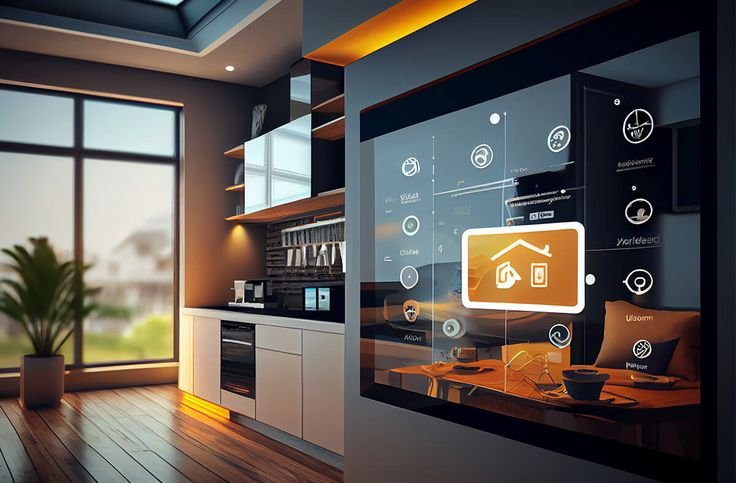
Smart home devices have been around for years, but the newest generation isn’t just connected—they’re intelligent. Sensors, AI, and machine learning now allow devices to anticipate user needs instead of simply responding to voice commands.
This week’s releases highlight major upgrades in:
- Smart thermostats that learn your routine and automatically adjust for comfort and energy savings.
- Smart refrigerators with food recognition, expiration tracking, and nutrition suggestions.
- AI-driven lighting systems that adapt brightness and color temperature based on mood, time of day, and activity.
- Smart speakers capable of holding more natural, contextual conversations with users.
The biggest shift is the rise of predictive automation—your home doesn’t wait for instructions; it acts based on patterns, preferences, and real-time data. For consumers, this means greater convenience, more efficient energy use, and smarter living environments.
2. Wearable Tech Is Transitioning into Health Intelligence Systems
Wearables in 2025 are far more than step counters. This week, top manufacturers introduced devices capable of advanced biometric analysis, including stress detection, metabolic tracking, continuous glucose monitoring, and real-time posture correction.
Key innovations include:
- Sensor-rich smartwatches that track micro-changes in heart rhythm, oxygen levels, and sleep cycles with medical-grade accuracy.
- AI-powered fitness rings offering metabolic insights and personalized recovery recommendations.
- Smart clothing embedded with flexible sensors to monitor movement, muscle activation, and physical strain.
- Next-gen AR glasses that blend daily productivity with live health metrics.
The transition from wearable tech to wearable intelligence marks a new era in personal wellness. These devices act as private health assistants, offering insights that help users detect early issues, optimize performance, and maintain daily well-being.
3. Future-Ready Connectivity: 5G Advanced and Wi-Fi 7 Expansion
Connectivity is the backbone of all digital innovation, and this year’s advancements are pushing the limits of wireless performance.
This week’s major development is the rapid global rollout of Wi-Fi 7, providing multi-gigabit speeds, ultra-low latency, and rock-solid stability even in congested environments. Paired with 5G Advanced—the upgraded version of 5G—consumers and industries now experience near-instant data transfer.
Highlights include:
- Uninterrupted 4K/8K streaming and cloud gaming.
- Superior performance for VR and mixed reality hardware.
- Faster communication between smart home devices and IoT networks.
- Enhanced reliability for autonomous vehicles and industrial systems.
As these networks expand, the world moves closer to seamless connectivity where devices communicate effortlessly, and digital experiences become smoother and more immersive.
4. AI Assistants Are Entering Their Most Powerful Generation Yet
AI has taken a monumental leap forward this year. The newest AI assistants aren’t limited to answering questions or setting reminders—they can reason, plan, and support complex tasks.
Recent developments include:
- Multimodal understanding, allowing AI to interpret images, text, voice, and video simultaneously.
- Advanced reasoning, enabling better decision-making and more accurate responses.
- Personalized memory systems that tailor suggestions based on long-term habits.
- Creative generation tools capable of producing videos, designs, 3D models, music, and full workflows.
What’s especially groundbreaking is the rise of AI copilots in everyday applications:
smartphones, PCs, cars, and even appliances now feature integrated AI engines that assist with productivity, creativity, and problem-solving.
AI is no longer a background tool—it is becoming a daily companion that enhances how we work, learn, shop, cook, and manage our lives.
5. Robotics Is Entering Mainstream Homes and Businesses
Robots are moving beyond industrial floors and becoming practical assistants for consumers and small businesses. This week showcased impressive breakthroughs in mobility, autonomy, and multi-tasking.
The most notable updates include:
- Household robots capable of organizing, cleaning, monitoring security, and even preparing simple meals.
- Robotic arms designed for retail, cafés, and workshops, enabling small businesses to automate repetitive tasks affordably.
- Delivery robots with improved navigation and obstacle detection for urban environments.
- Companion robots for elderly users, with empathetic communication powered by emotional AI.
These advancements reflect a shift toward robots as household helpers and workplace collaborators. With better sensors, improved AI navigation, and safer designs, robotics is quickly becoming part of everyday life.
6. Breakthroughs in Sustainable Technology and Eco-Energy Solutions
Sustainability is one of the hottest topics in tech, and this week brought a wave of innovations focused on energy efficiency and environmental impact.
Among the latest breakthroughs:
- Next-gen solar panels that work efficiently even in low-light conditions.
- Solid-state batteries with faster charging, higher safety, and longer life cycles.
- AI-powered energy management systems that reduce household and office power consumption.
- Biodegradable materials used in packaging, consumer goods, and wearables.
Governments and corporations are investing heavily in carbon-neutral technology, signaling a future where sustainability becomes a core design principle rather than a bonus feature.
7. Immersive Tech: Mixed Reality Is Becoming a Daily Experience
Mixed Reality (MR) has matured into a powerful platform for work, education, gaming, and communication. The most recent announcements highlight massive improvements in realism and usability.
New features gaining attention include:
- Ultra-sharp MR displays that eliminate the graininess of earlier headsets.
- Hand-tracking gestures that provide controller-free interaction.
- Virtual multi-screen setups for productivity and entertainment.
- AI-generated 3D environments that adapt dynamically to user needs.
MR is no longer just a gaming accessory—it’s becoming a replacement for physical monitors, classrooms, and meeting rooms. With more creators and enterprises adopting immersive platforms, the line between digital and physical environments continues to blur.
8. Next-Gen Computing: Quantum and Neuromorphic Chips Show Real Potential
Advanced computing took center stage again this week as researchers announced breakthroughs in both quantum computing and neuromorphic chip design.
The highlights include:
- Improved qubit stability, reducing quantum errors and enabling more complex simulations.
- Brain-inspired neuromorphic processors that operate with extremely low power while mimicking human neural pathways.
- Hybrid architectures that combine classical and quantum computing for faster data analysis.
These advancements signal the future of computing—systems that can handle problems traditional hardware cannot solve efficiently. Applications include drug discovery, climate modeling, advanced AI, financial analysis, and next-level cybersecurity.
9. Smart Transportation: Autonomous Systems Are Becoming More Reliable
Smart mobility is undergoing a technological revolution. The newest autonomous systems demonstrated this week show major improvements in safety, dexterity, and decision-making.
Recent updates include:
- Autonomous cars with improved real-time hazard detection.
- AI-assisted aviation tools for enhanced flight navigation.
- Smart public transport systems optimizing routes based on live data.
- Personal mobility robots and e-scooters with self-parking and auto-charging capabilities.
Cities worldwide are adapting infrastructure to support connected transportation networks, pointing toward a future of efficient, data-driven mobility.
10. What This Means for the Future
Taken together, these innovations show that the next few years will redefine how humans interact with technology. Key trends emerging from this week’s breakthroughs include:
- AI will continue to integrate into every aspect of daily life, from appliances to workplaces.
- Connectivity will become instantaneous, enabling richer digital experiences.
- Smart devices will evolve into autonomous systems that anticipate needs and act without direct input.
- Sustainability will shape new product designs, influencing everything from materials to battery technologies.
- Immersive computing will replace traditional screens, giving rise to hybrid physical-digital worlds.
- Future-ready tech will become accessible, not just a luxury for high-end users.
Innovation is accelerating, and we are entering a future where intelligent systems, hyper-connected networks, and smart environments shape a new digital lifestyle.
The tech revolution is no longer coming—it’s here, arriving every week with breakthroughs that redefine what’s possible.
